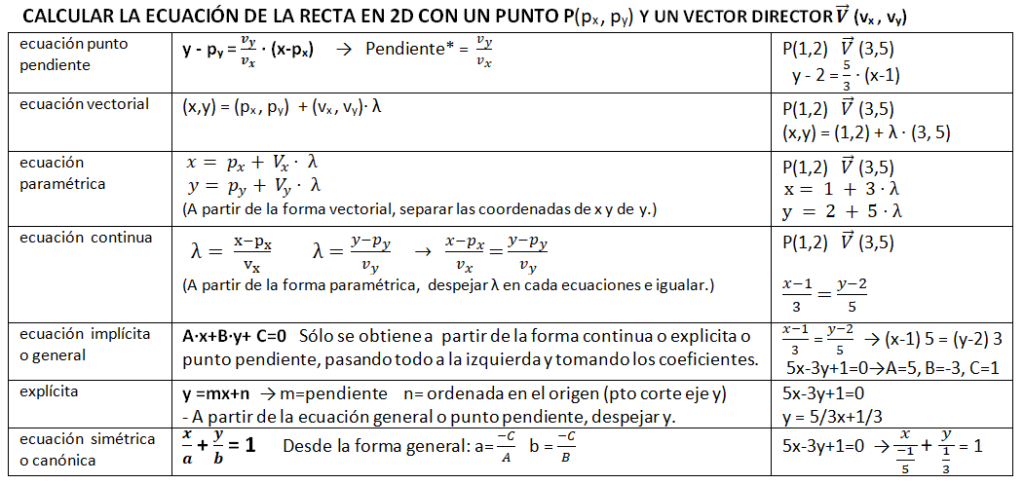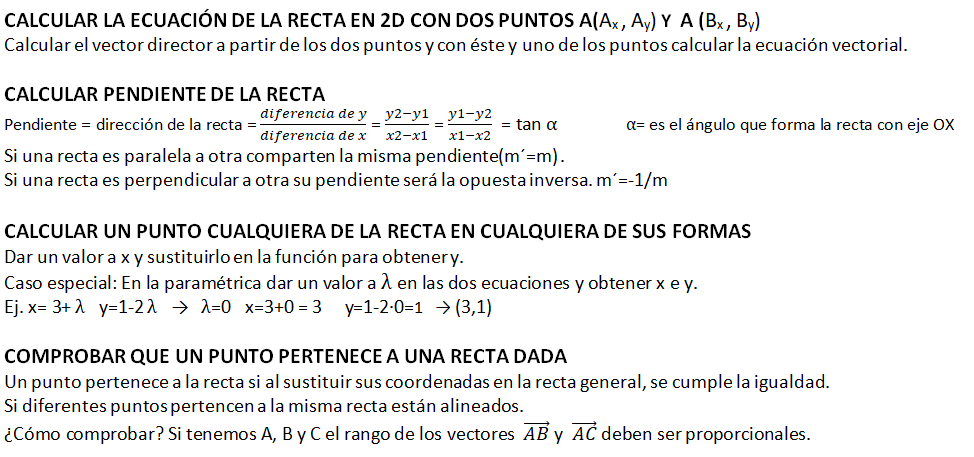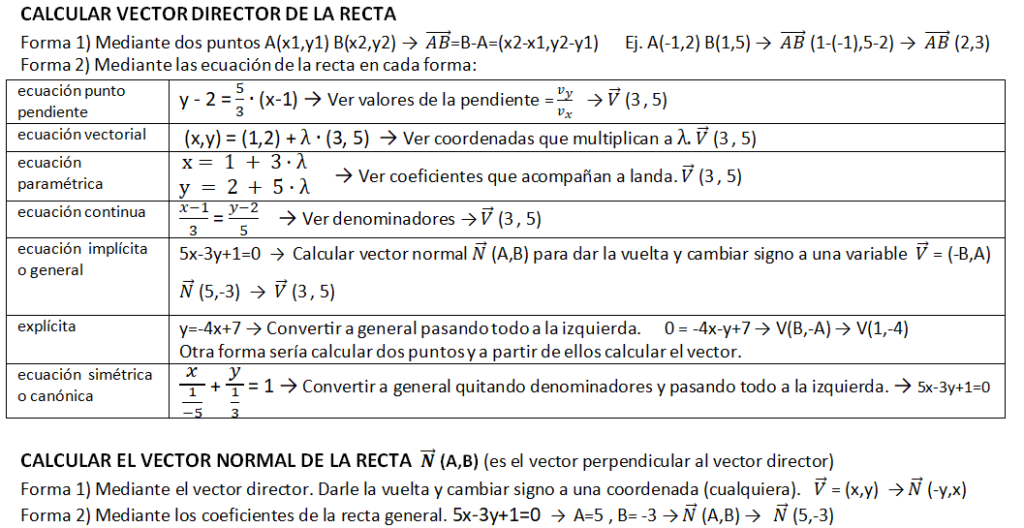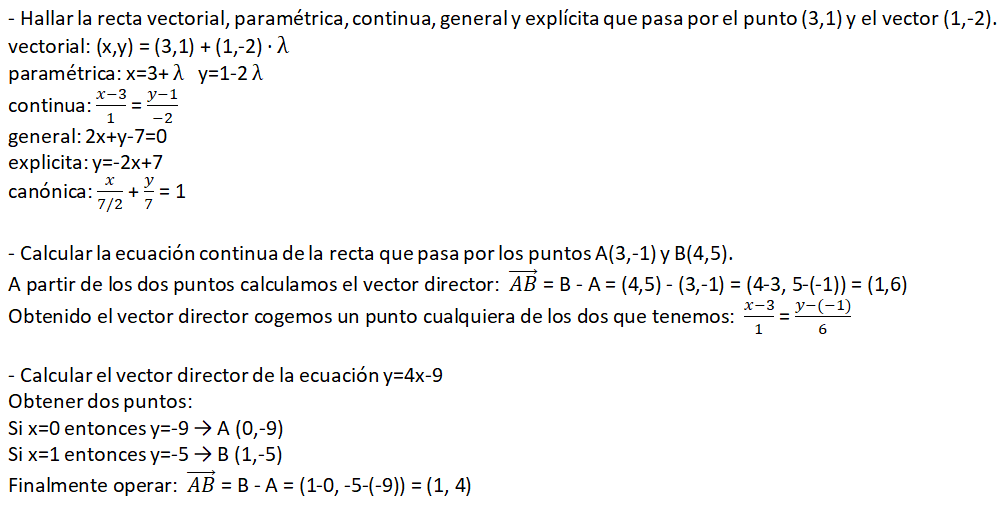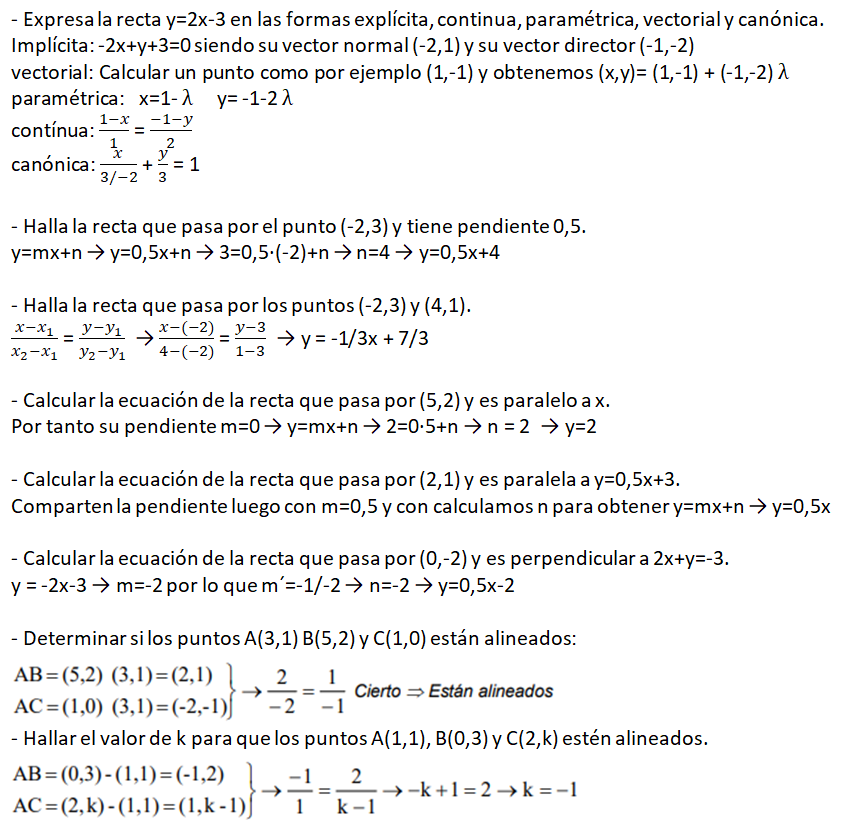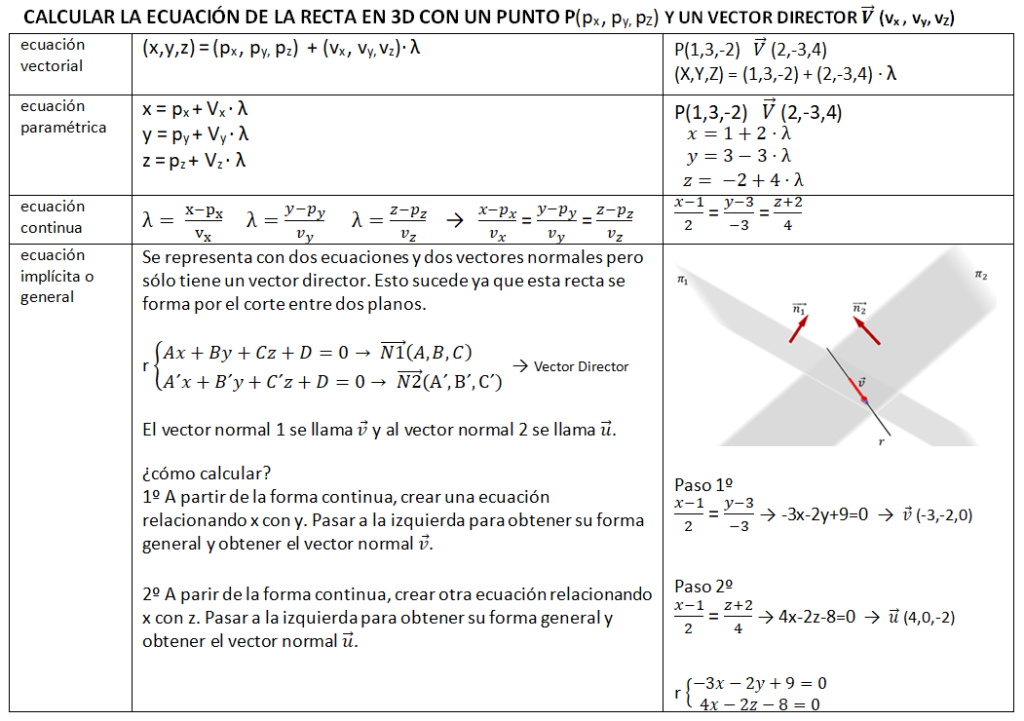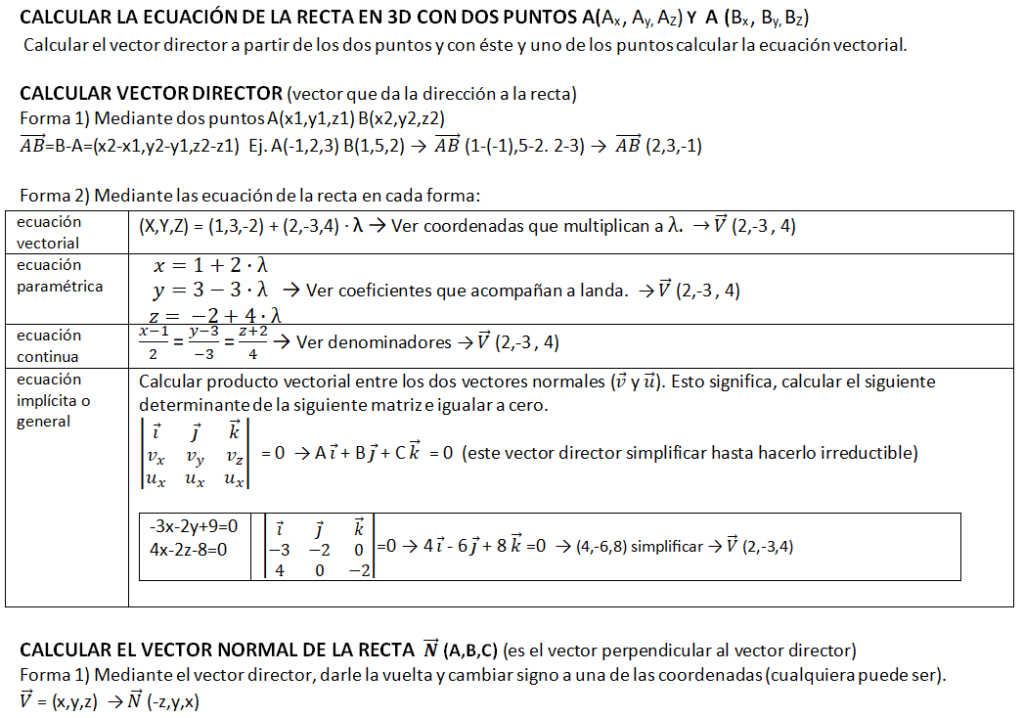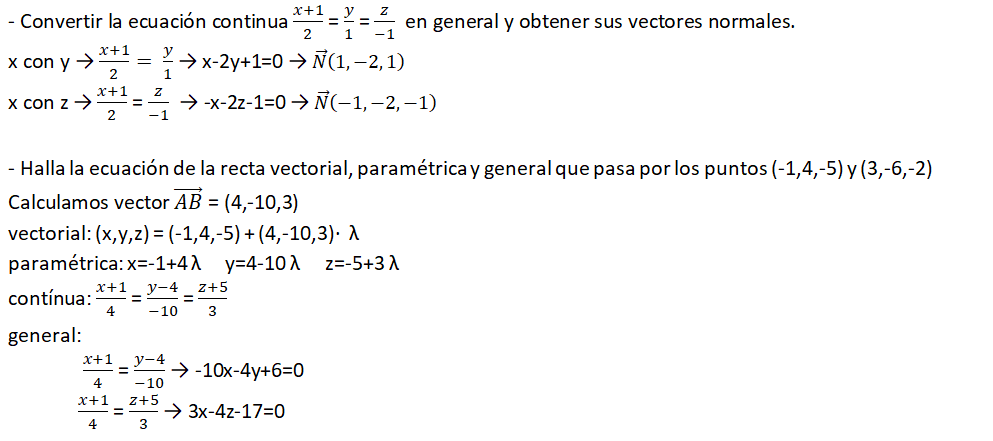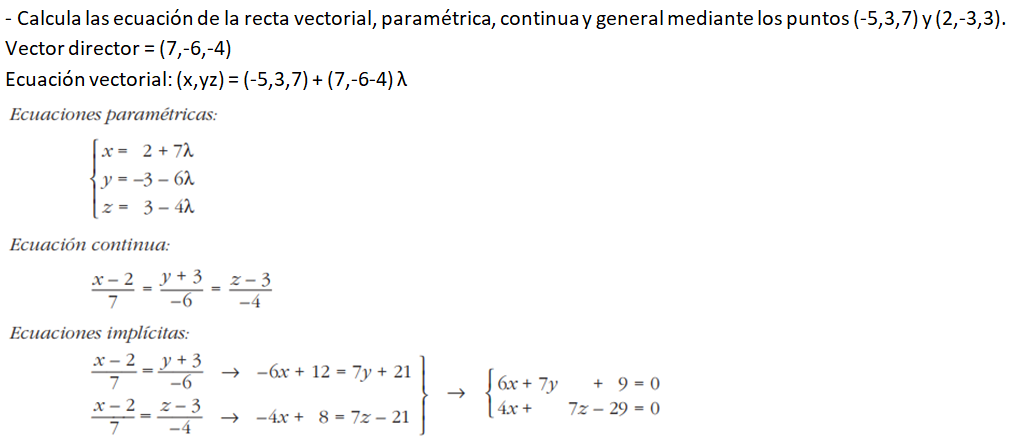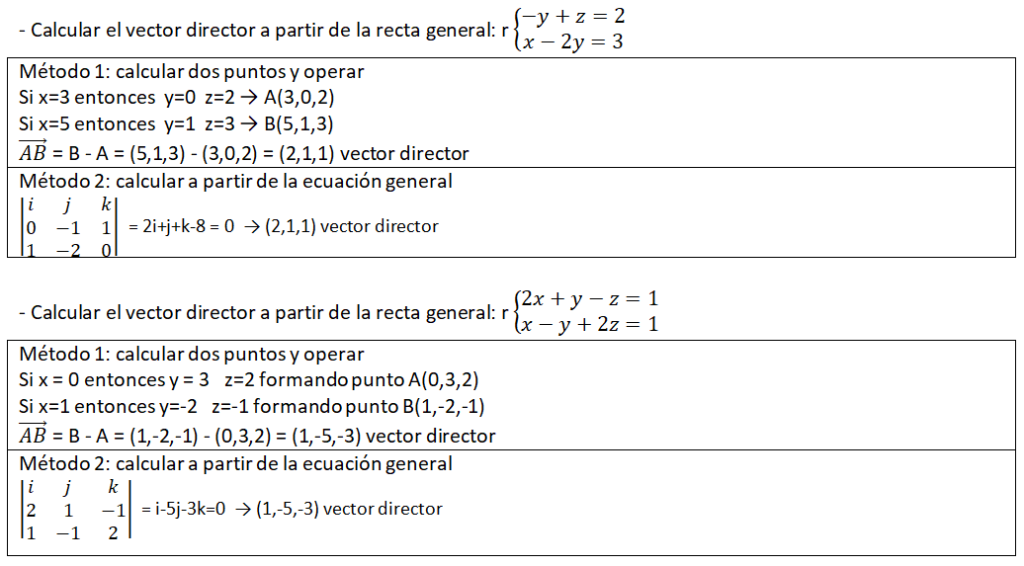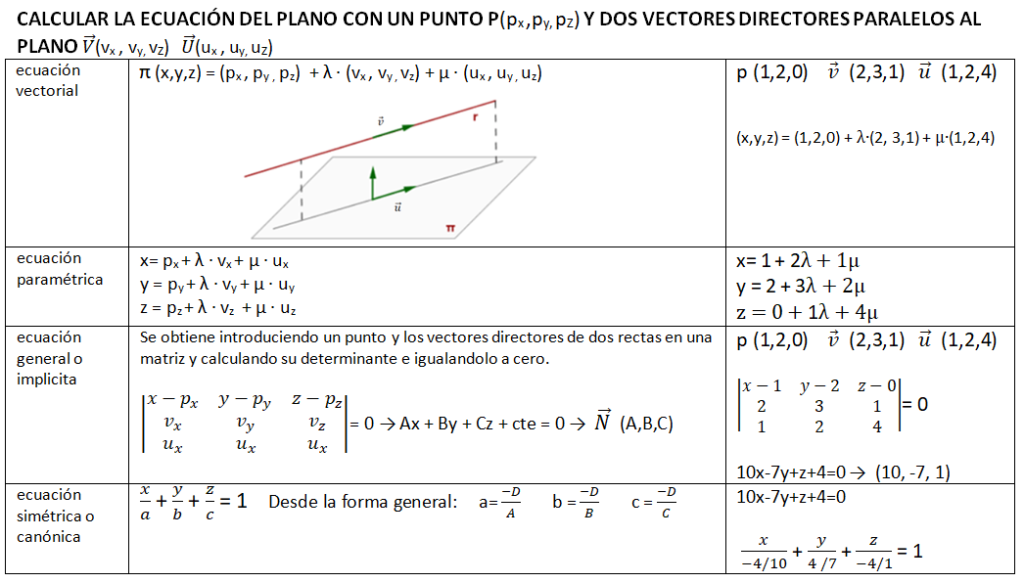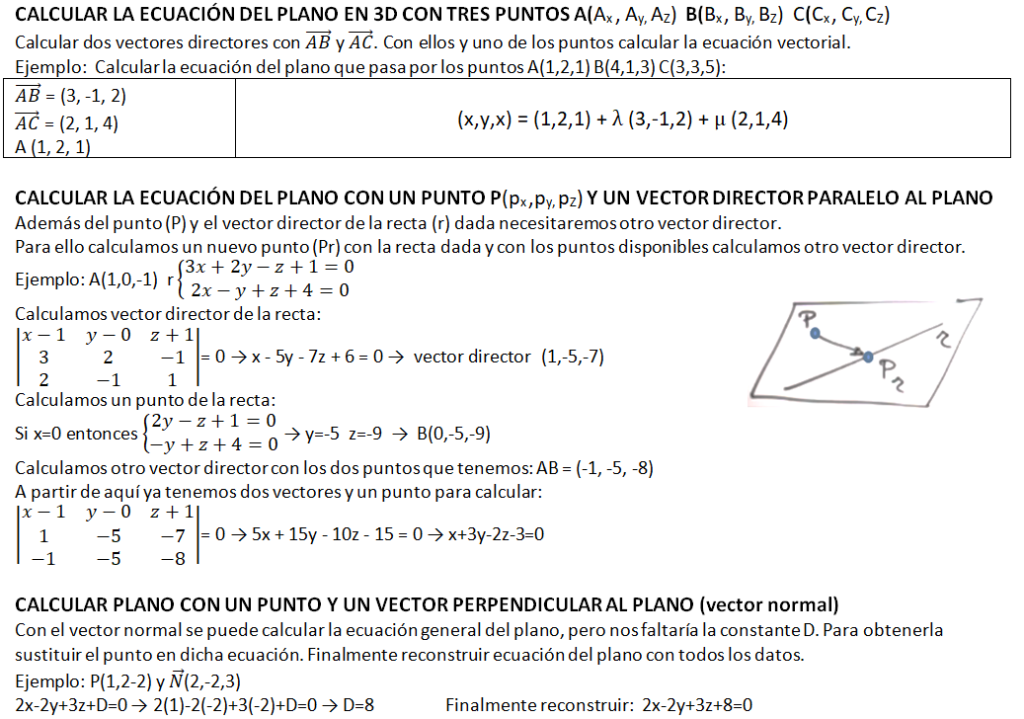
ECUACIÓN DE LA RECTA 2D


EJERCICIOS:


ECUACIÓN DE LA RECTA 3D


EJERCICIOS:


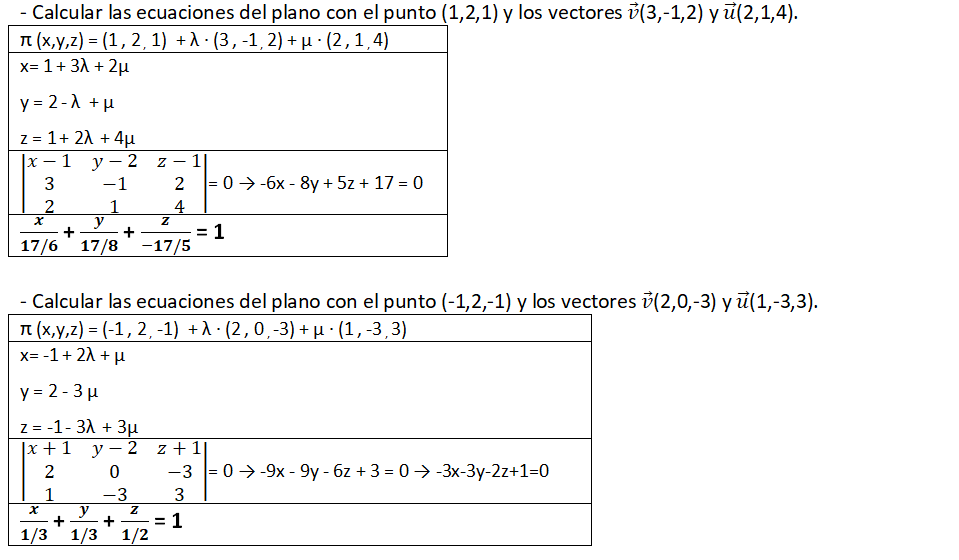
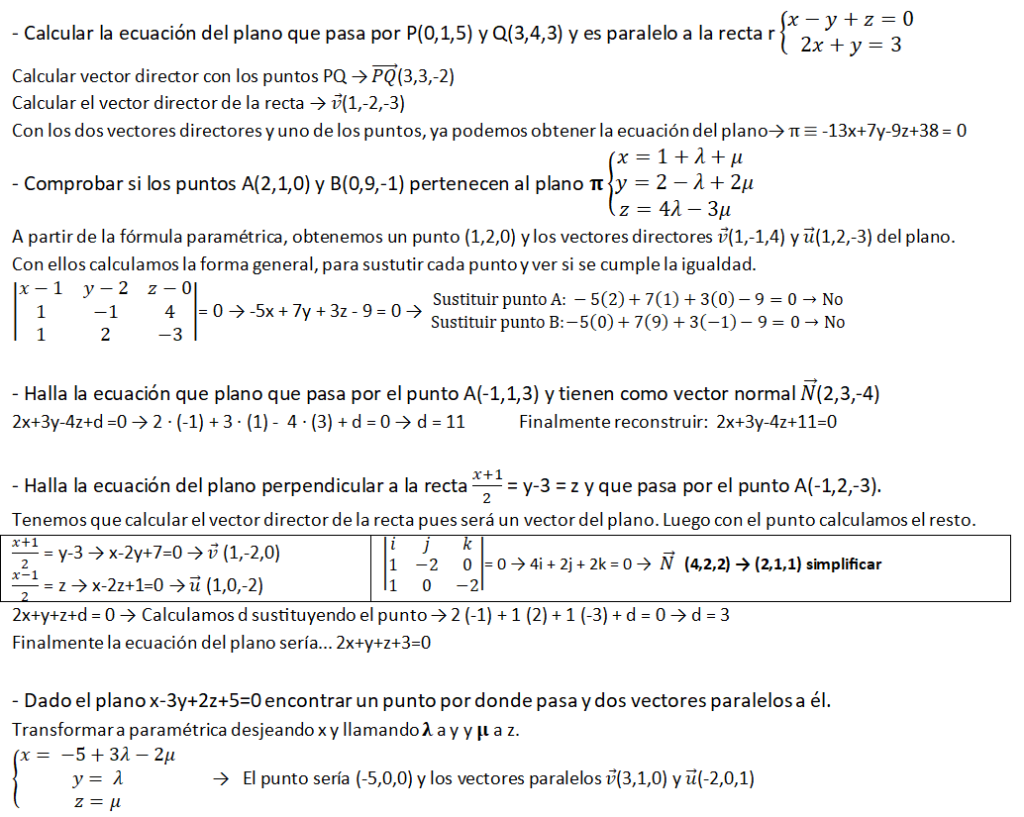
PLANO


EJERCICIOS:


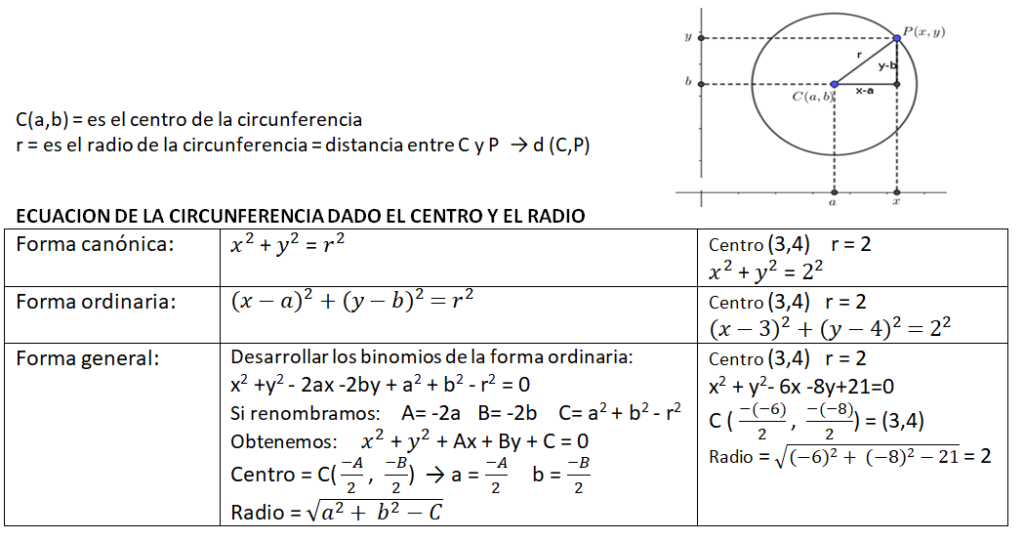
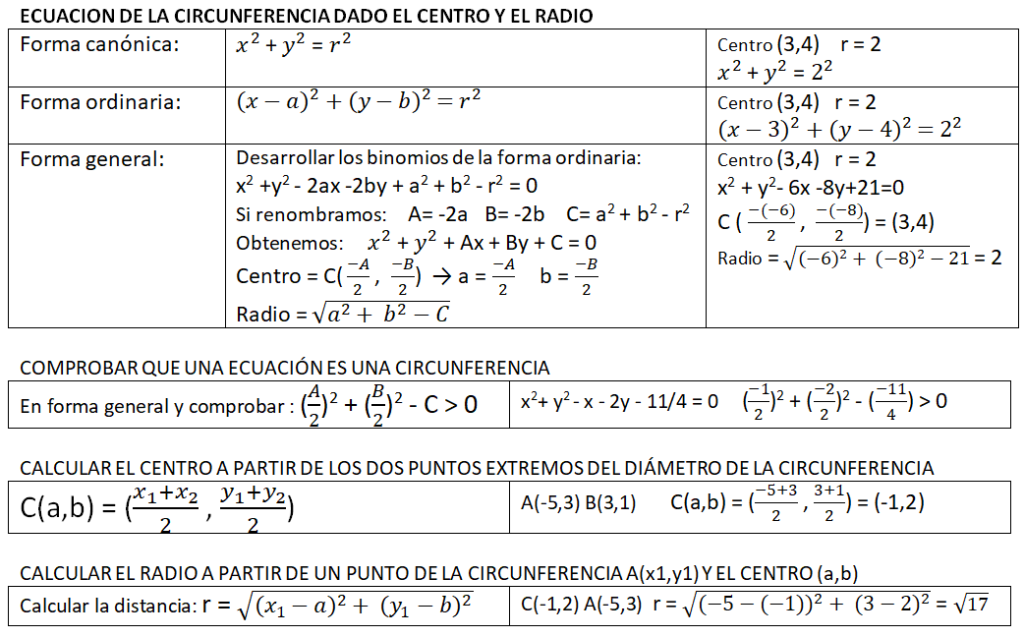
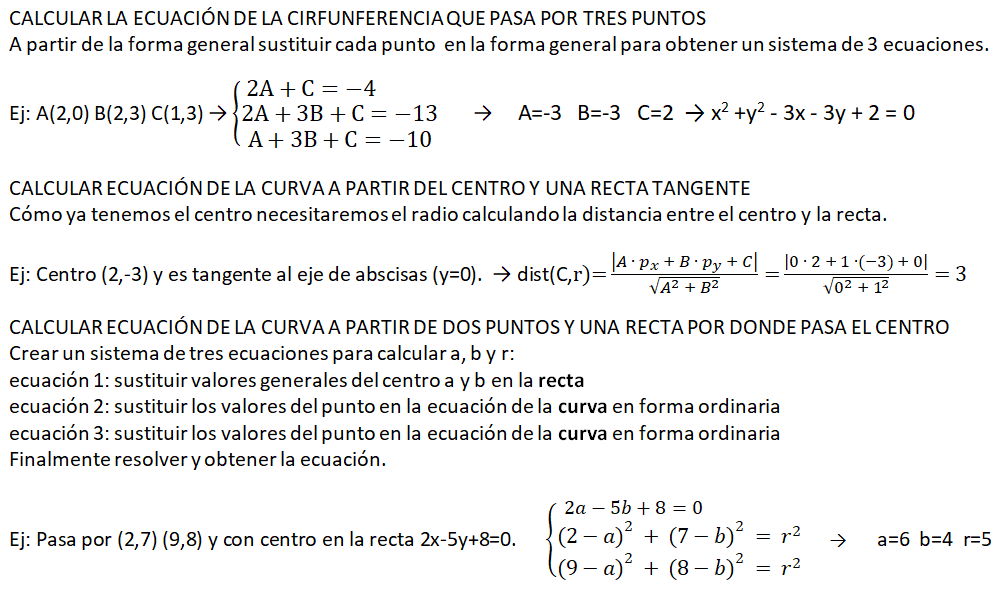
CIRCUNFERENCIA


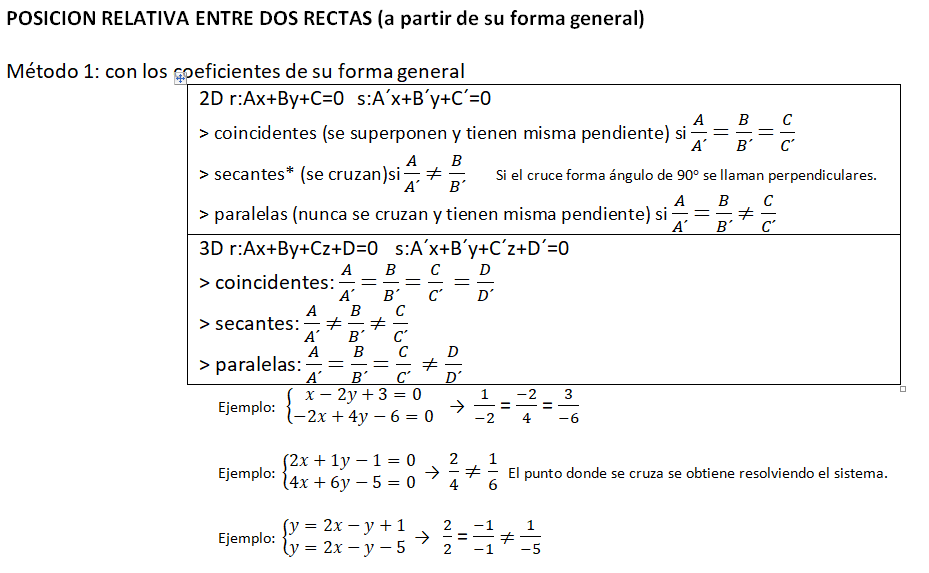
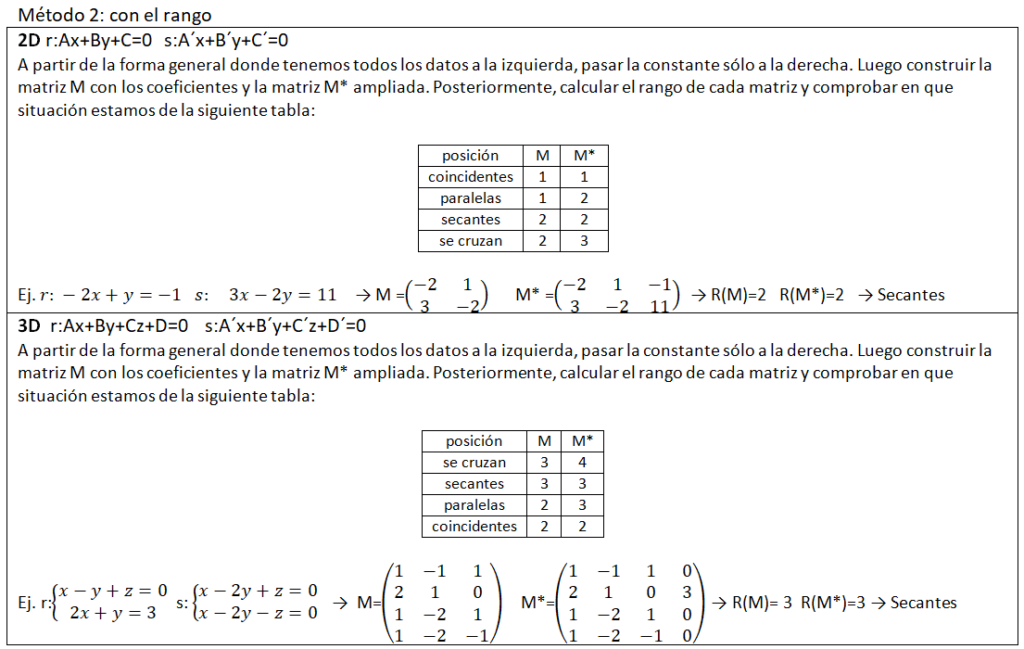
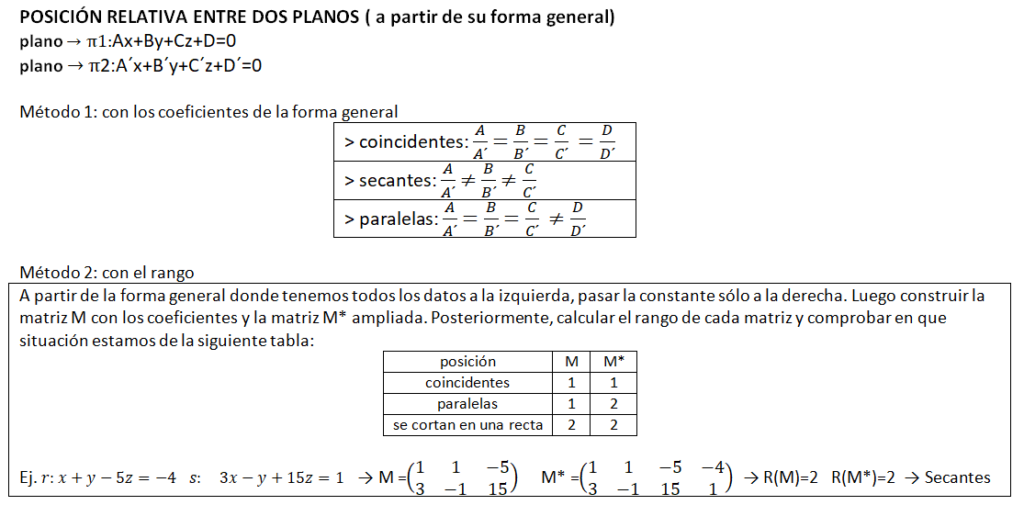
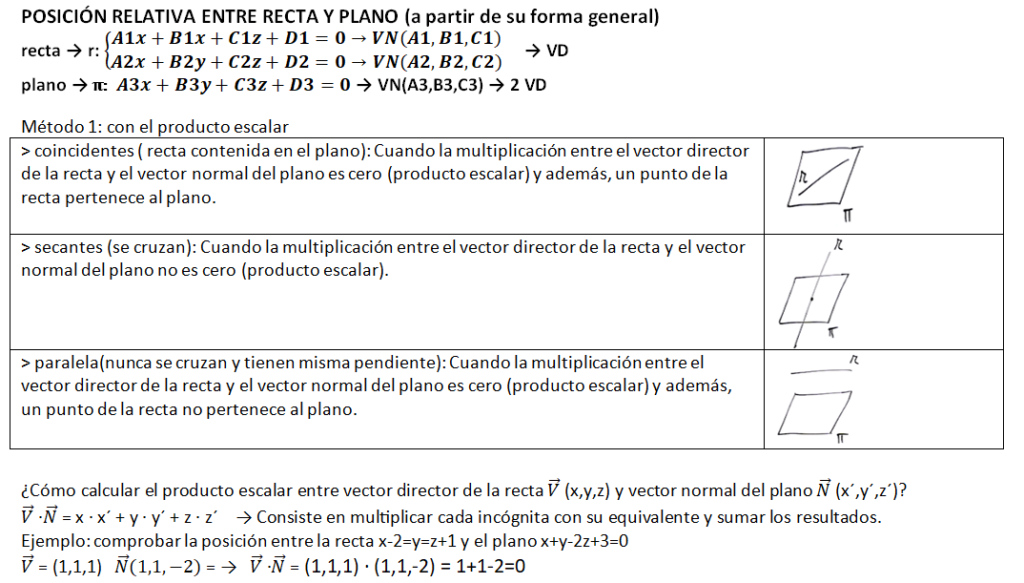
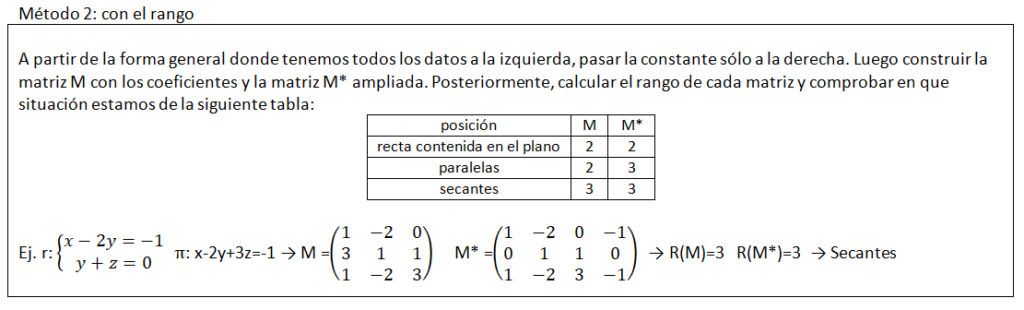
POSICIÓN RELATIVA


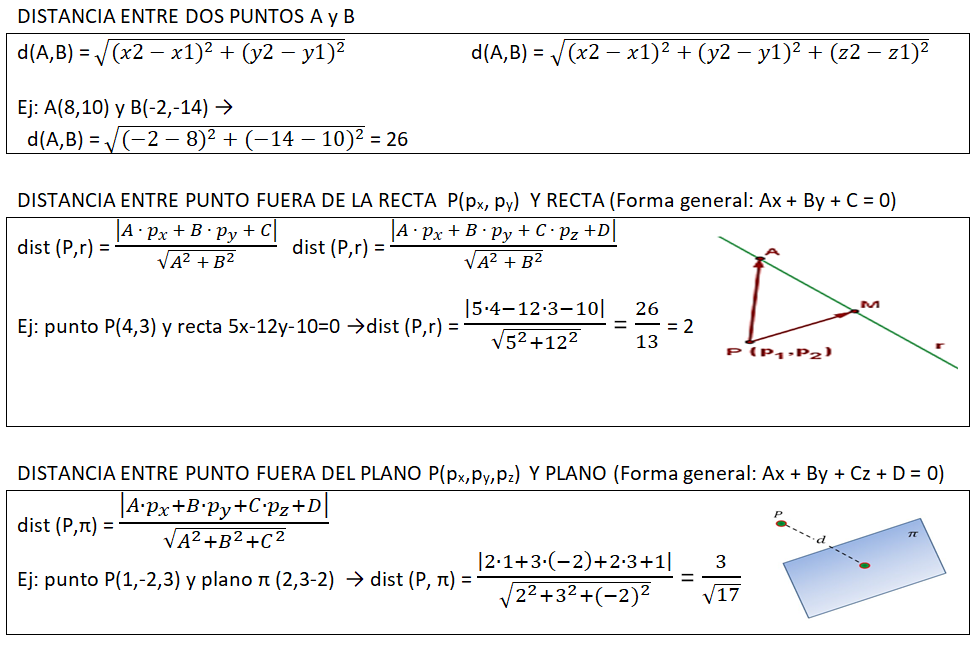
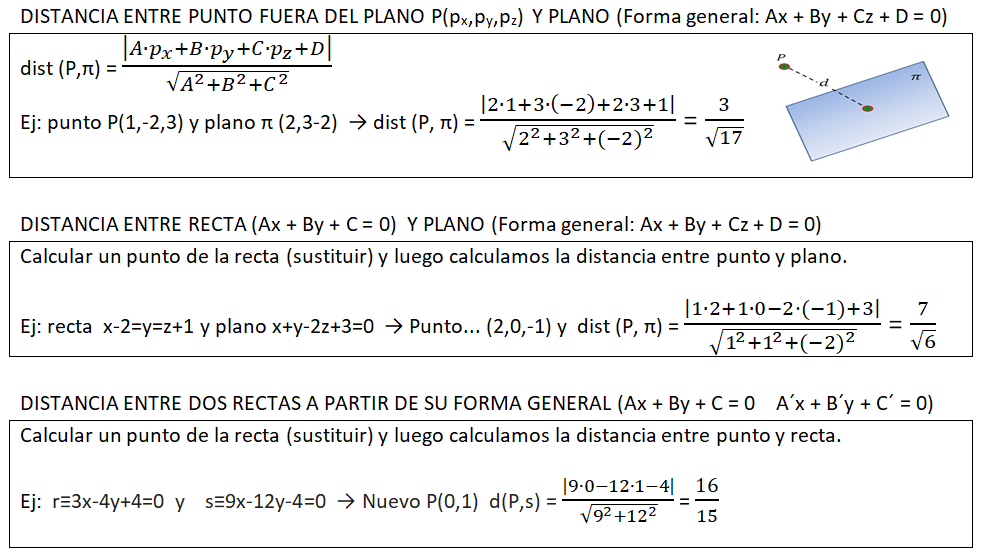
DISTANCIA (mínima)


EJERCICIOS:


EJERCICIOS:


EJERCICIOS:


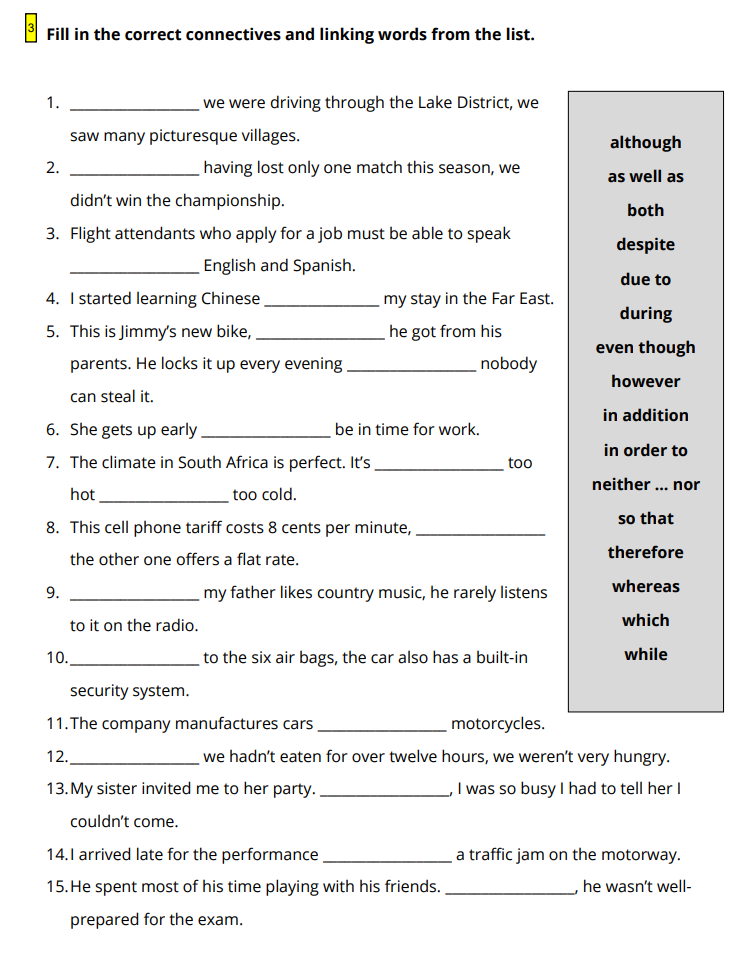
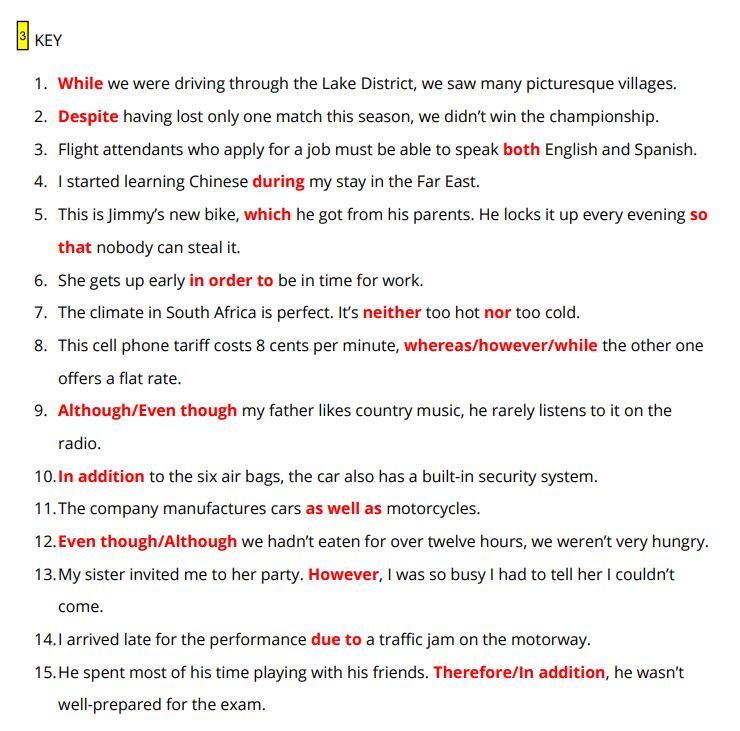
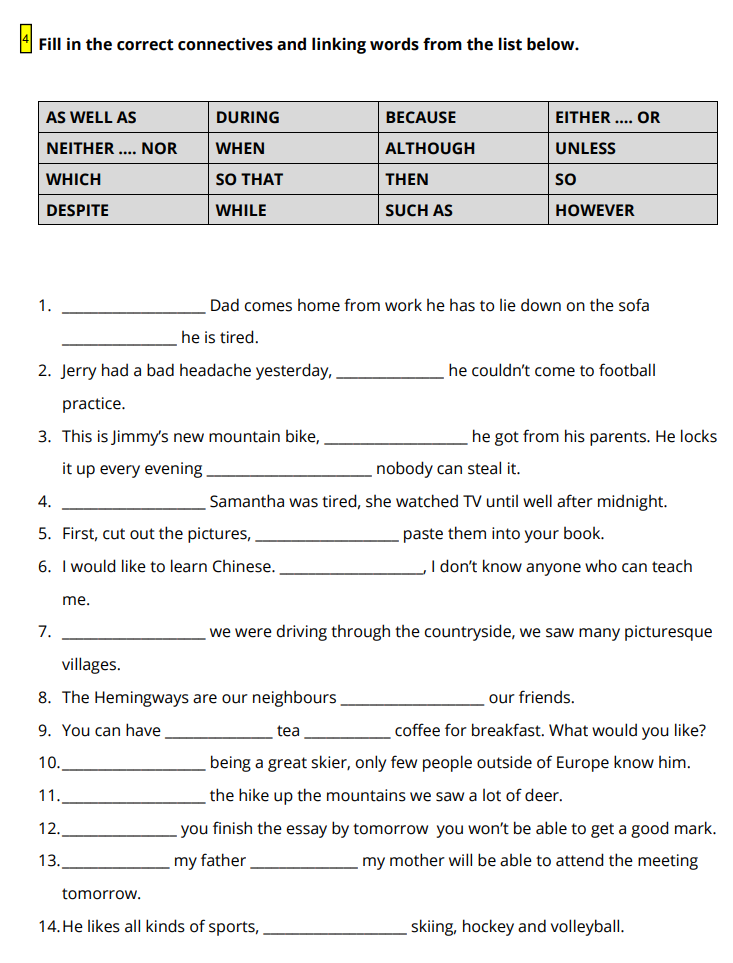
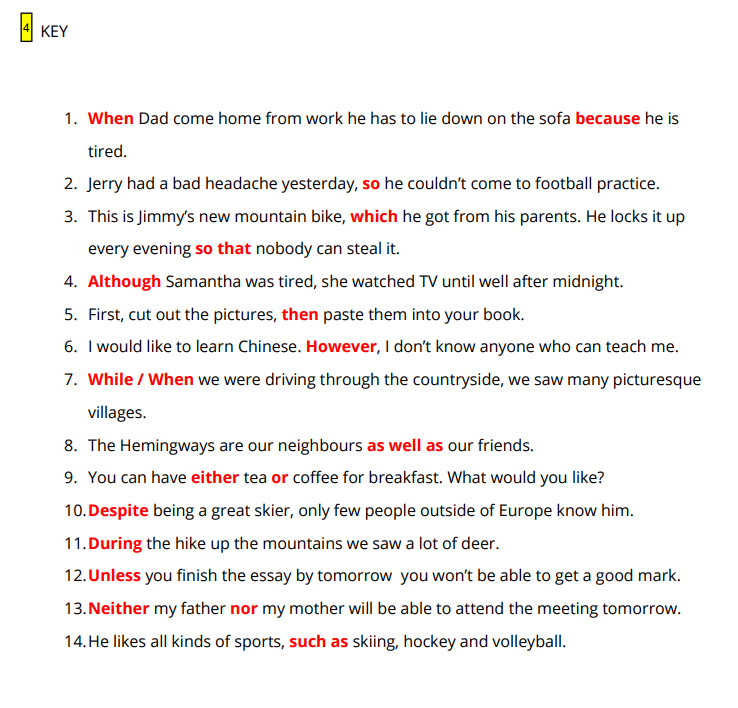
1. Change into singular:
Cat – Book – Child – Bus – Box – Woman – Leaf – Foot – Person – Mouse
2. Change into plural:
Dogs – Cars – Teeth – Wolves – Men – Knives – Batteries – Tomatoes – Geese – Babies
3. Decide if nouns are contable or uncontable:
1. The children are playing in the garden.
2. I don’t like milk.
3. I prefer tea.
4. Scientists say that the environment is threatened by pollution.
5. My mother uses butter to prepare cakes.
6. There are a lot of windows in our classroom.
7. We need some glue to fix this vase.
8. The waiters in this restaurant are very professional.
9. My father drinks two big glasses of water every morning.
10. The bread my mother prepares is delicious.
11. Drivers must be careful; the road is slippery.
12. Some policemen are organizing road traffic to avoid any accidents.
13. I bought three bottles of mineral water for our picnic.
14. I’d like some juice please!
15. Successful candidates will join the camp later this year.
16. A rise in oil prices is inevitable since there is more and more world demand for energy.
17. The exercises on this website are interesting.
18. Dehydrated babies must drink a lot of water.
19. I met some nice people when I was walking along the beach.
4. Decide if nouns are contable or uncontable:
egg, oil, orange, water, spoon, salt, flour, coffee, potato, cake
> Put the, a or an o in the correct position:
1 I have …………………. egg for breakfast every morning.
2 Alan has got …………………. cute dog. …………………. dog is brown.
3 Brad Pitt is …………………. actor.
4 I have got …………………. apple. …………………. apple is in my schoolbag.
5 My sister is …………………. dentist.
KEYS: 1 an 2 a,the 3 an 4 an, the 5 a
> Put some or any in the spaces:
1. I bought ……… cheese but I didn´t buy …….. bread.
2. I´m going to the post office. I need …….. stamps.
3. There aren´t …….. shops in this part of town.
4. George and Alice haven´t got …….. children.
5. Have you got …….. brothers of sisters?
6. There are …… beautiful flowers in the garden.
7. Would you like …… tea? Yes, please.
8. Don´t buy …… rice. We don´t need …….
9. I went out to buy …… milk but they didn´t have …… in the shop.
10. I´m thirsty. Can I have …… water, please?
KEYS: 1 some, any 2 some 3 any 4 any 5 any 6 some 7 some 8 any,any 9 some,any 10 some
> Choose the correct word (some or any).
1. I need a car and The kids ……. in the garden last Saturday dollars.
2. He would like The kids …….. in the garden last Saturday help.
3. There aren’t ……. policemen in the street.
4. Do you know ……… plumber?
5. He needs to make ……… friends.
6. Do you have ………. idea why he is always alone?
7. Charley doesn’t have ……… friends, too.
8. My sister has got ……… interesting books about history.
9. My mum doesn’t read ………. poetry .
10. I’ve got ……… news for you.
KEYS 1 some 2 some 3 any 4 any 5 some 6 any 7 any 8 some 9 any 10 some
> Put some or any:
1 I’d like to have ………………….spaghetti fordinner.
2 Is there ………………….watermelon for me?
3 There aren’t ………………….evil characters inthe school play.
4 Please buy ………………….crayons for thechildren.
5 I’m going to the post office. Do you need………………….stamps?
6 We have got ………………….cereal forbreakfast.
KEYS: 1 some 2 any 3 any 4 some 5 any 6 some
> Complete the sentences with some or any and a word from the list: problems photos choirs friends batteries biscuits
1 I can’t buy these sweets. I haven’t got_________
2 I want to wash my hair. Is there________ ?
3 I’m going to the bakery to buy __________
4 I haven’t got my camera so I can’t take __________
5 Everybody was standing because there weren’t ____________
6 Are there___________ in the radio?
7 I went to Tina’s party lost night with _____________
8 Sorry I’m late. I had _______with my bike.
KEYS: 1 any money 2 any shampoo 3 some biscuits 4 any photos 5 any chairs 6 any batteries 7 some friends 8 some problems
> Use the most common words
1.There isn’t ….. coffee
2.How ….. eggs are there?
3.There are ….. fish.
4.Don’t eat too ….. sweets.
5.How ….. is it?
6.Peter drinks ….. water.
7.We didn’t hear ….. noise.
8.There aren’t ….. cars.
9.She has ….. books.
10.I love you very …… .
11.There weren’t …. animals.
12.Is there ….. snow?
13.There was …. smoke.
14.I haven’t got …. shoes.
15.It has ….. legs.
16.They are ….. older than me.
17.Did you watch….. movies?
18.Thank you very….. .
19.I made …… mistakes.
20.For how ……. nights?
KEYS: 1 much 2 many 3 a lot of 4 many 5 much 6 a lot of 7 much 8 much 9 many 10 a lot of 10 much
11 many 12 much 13 a lot of 14 many 15 a lot of 16 much 17 many 18 much 19 a lot of 20 many
> Write the most common forms between much, many or a lot of:
1.How … owls are there?
2.I met …. friends.
3.There isn’t …. rice.
4.He bought ….. tea.
5.We didn’t see ….. rats.
6.How …. money do you need?
7.I have too …. problems.
8.They asked ….. questions.
9.Pamela drinks too ….. .
10.Are there ….. mountains?
KEYS: 1 many 2 a lot of 3 much 4 a lot of 5 many 6 much 7 many 8 a lot of 9 much 10 many
> Write much, many or a lot of:
1. She can drink ….. water, but she cannot drink much coffee.
2. She does not eat …….meat, but she eats a lot of vegetables.
3. She has got a lot of dresses, but she has not got ….. skirts.
4. She does not buy much perfume, but she buys ….. clothes.
5. Every morning she buys a lot of newspapers, but she does not buy …. magazines.
6. How …… English books have you got?
7. I have got …….. English books, but I have not got many Spanish ones.
8. How …… money do you need to buy this French dictionary?
9. Are there ….. new students in the class?
10. There are not ……. Italian teachers in that school, but there are a lot of English ones.
KEYS: 1 a lot of 2 much 3 many 4 a lot of 5 many 6 many 7 a lot of 8 much 9 many 10 many
> Complete the sentences with many or much.
1 There are______ books in the library.
2 She doesn´t like _____sugar in her tea.
3 How _______does the bike cost?
4 The boy has got ______toys.
5 There are_______ apples on the tree.
6 We know _______people in London.
7 There isn´t ________chocolote in the cupboard.
8 He doesn´t have ______time.
KEYS: 1 many 2 much 3 much 4 many 5 many 6 many 7 much 8 much
> Put much or many in the spaces:
1. There is some food, but not …. drink.
2. There wasn´t …. rain last month.
3. Does the teacher speak …. languages?
4. I don´t put …. sugar in my tea.
5. A poor woman can´t buy …. dresses.
6. That old man hasn´t got …. hair.
7. I can´t see ….. birds on the trees.
8. My mother didn´t buy …. eggs.
9. There isn´t …. milk in this bottle.
10. Did you learn ….. English words last year?
KEYS: 1 much 2 much 3 many 4 much 5 many 6 much 7 many 8 many 9 much 10 many
> Choose the correct words.
1 Were there many / much students in your class last year?
2 Are there a lot of/ much girls in your class?
3 Do you have much / many fun at school?
4 How many / How much time do you study every day?
5 How many / How much people are there in your family?
6 Are there many / much books in your bedroom?
KEYS: 1 many 2 a lot of 3 much 4 how much 5 how many 6 many
> Complete the sentences with many, much, a or an.
1 There are ______books in the library.
2 I haven’t got ______money.
3 How_____ does the bicycle cost?
4 The boy has got _____new toy.
5 There were ______monkeys in the cage.
6 We know_______ people in London.
7 Was there _____erwelope on the desk?
8 There wasn’t______ jam on the bread.
KEYS: 1 many 2 much 3 much 4 a 5 many 6 many 7 an 8 much
> Put a little or a few in the spaces:
1. Could you possible lend me ….. potatoes until tomorrow?
2. Have you got ….. minutes? I´d like to talk to yo.
3. I need ….. money. Can you help me?
4. I´m going to France for ….. days next week.
5. …… people arrived before the party started, but not many.
6. We only have ….. petrol left.
7. Can I ask you ….. questions?
8. The bank only lent me ……money.
9. Only …… students are going to fail the exam.
10. I always put ….. milk in my tea.
KEYS: 1 some 2 some 3 any 4 any 5 some 6 any 7 any 8 some 9 any 10 some
> Decide whether you have to use «a little» or «a few».
1. We had ……….. snow last winter.
2. …………. people were interested in the exhibition.
3. I speak ………….. French.
4. There are …………. students in the classroom.
5. She has ………….. relatives.
6. There is …………..water in the pond.
7. The professor spends ……….. time playing tennis on Sundays.
8. We have ……….. knowledge of this phenomenon.
9. There are …………. mushrooms in my mushroom soup.
10. …………… animals can survive in the desert.
KEYS: 1 a little 2 a few 3 a little 4 a few 5 a few 6 a little 7 a little 8 a little 9 a few 10 a few
> Choose the correct quantifier:
1. They have had … …. homework in mathematics recently.
2. How ….. time do you need to finish the work?
3. There are too …… students in the library.
4. Have you visited …… foreign countries?
5. Although he’s very ill, he didn’t take ….. medicine.
6. ….. people know as much about linguistics as John does.
7. They say ….. knowledge is a dangerous thing.
8. He’s having ……. trouble passing his driving test.
9. I spend …….. of my time reading novels.
10. He knows ……. English. He knows enough English to manage.
11. We have ….. oranges.
12. We don’t have ….. bananas, and we don’t have ……. fruit juice.
13. Do you have any cereal? Sure, there’s ….. in the kitchen.
14. How ….. is this? It’s ten dollars.
15. How ….. do you want? Six, please.
16. He’s very busy; he has ….. work to do.
17. David has ….. rice, but Tyler doesn’t have ….
18. London has …… beautiful buildings.
19. They eat … …. apples.
20. I wrote …… poems.
21. I have got ….. money.
22. I visited ….. European cities.
23. Do you like soccer? Yes, …..
24. Were there …. guests in the wedding? Yes, there were …..
25. Leila is popular. She’s got …. friends. Nancy does not have ….
26. She hasn’t got … patience.
KEYS: 1 lots of 2 much 3 many 4 any 5 any 6 few 7 little 8 a lot of 9 most 10 a little 11 a lot of 12 many 13 a lot 14 much 15 many 16 a lot of 17 a lot of, much 18 a lot of 19 a lot of 20 many 21 lots of 22 many 23 a lot 24 many, a lot 25 a lot of, many 26 muchf 2many /much 3 a lot 4 much 5 many 6 a lot of 7 a lot of / much 8 a lot of 9 a lot of 10 many
REPLACE THE SUBJECT BY A PERSONAL PRONOUN.
1. The boy is fat.
2. The girl is tall.
3. My friends and I go to school.
4. The horse is strong.
5. Peter is a policeman.
6. Mary and John come from England.
7. Marta is a teacher.
8. My family and I go to Madrid.
9. The dog runs fast.
10. The students study English.
11. The man is strong
12. The dog is fat.
13. My mother is kind.
14. You and I are students.
KEYS: 1 he 2 she 3 they 4 it 5 he 6 they 7 she 8 they 9 it 10 they 11 he 12 it 13 she 14 they
REPLACE THE SUBJECT BY A PERSONAL PRONOUN.
1. The nurse is in the car.
2. The buses are on the road.
3. The policeman is strong.
4. My father has four children.
5. A woman is swimming.
6. The children are in school.
7. Mrs. Brown is in the kitchen.
8. My uncle is in the rice field.
9. My aunt is in the kitchen.
10. John and I are learning English.
11. A bird has a nest.
12. Mr. Brown is eating lunch.
13. Mary and I are friends.
14. The dog is running.
KEYS: 1 she 2 they 3 he 4 he 5 she 6 they 7 she 8 he 9 she 10 thet 11 it 12 he 13 they 14 it
CHOOSE THE CORRECT PERSONAL PRONOUN:
KEYS: 1 she 2 he 3 it 4 they 5 it 6 we 7 they 8 he 9 she 10 she
FILL THE BLANK WITH THE SUITABLE OBJECT PRONOUN
KEYS: 1 you 2 them 3 him 4 you 5 it 6 her 7 us 8 me 9 her 10 it 11 them 12 me 13 you 14 us
FILL THE BLANK WITH THE SUITABLE OBJECT PRONOUN
KEYS: 1 you 2 us 3 it 4 him 5 it 6 him 7 them 8 us 9 me 10 her 11 them 12 me 13 him 14 her
CHOOSE THE CORRECT OBJECT PRONOUN:
KEYS: 1 her 2 him 3 him 4 them 5 them 6 her 7 it 8 her 9 it 10 him 11 them 12 it 13 them 14 them 15 it 16 her 17 it 18 it 19 them 20 him
POSSESIVE PRONOUNS
1. These are my pencils. They are …..
2. It is her book. It is …..
3. Those are his toys. Those are …..
4. Those are their apples. Those are …..
5. These are our notebooks. These are …..
6. It is your pencil sharpener. It is …..
7. Is that your ruler? Is it …..?
8. It’s our house. It’s …..
9. That’s my hat. That’s …..
10. Those are our gloves. Those are …..
11. This is her car. It is …..
12. That is his bag. That is …..
13. These are their books. These are …..
14. This is my cartoon book. This is …..
1 mine 2 hers 3 his 4 theirs 5 ours 6 yours 7 yours 8 yours 9 mine 10 ours 11 hers 12 his 13 their 14 mine
POSSESIVE PRONOUNS
KEYS: 1 mine 2 ours 3 his 4 hers 5 yours 6 yours 7their 8 mine 9 their 10 hers 11 his 12 ours 13 mine ours
FILL THE BLANK WITH THE SUITABLE REFLEXIVE PRONOUNS
KEYS: 1 himself 2 herself 3 ourselves 4 herself 5 myself 6 himself 7 itself 8 herself 9 themselves 10 themselves 11 themselves 12 myself 13 herself 14 themselves
FILL THE BLANK WITH THE SUITABLE REFLEXIVE PRONOUNS
KEYS: 1 myself 2 herself 3 ourselves 4 himself 5 themselves 6 yourself 7 himself 8 themselves 9 herself 10 himself 11 ourselves 12 themselves 13 yourself 14 themselves
CHOOSE THE CORRECT REFLEXIVE PRONOUNS:
KEYS: 1 himself 2 herself 3 ourselves 4 yourself 5 myself 6 himself 7 itself 8 herself 9 yourselves 10 themselves 11 themselves 12 myself 13 himself 14 yourself 15 yourself 16 herself 17myself 18 itself 19 yourselves 20 ourselves
ADJECTIVES (DEMOSTRATIVE AND POSSESSIVE)
Choose the right word:
KEYS: 1.their,ours 2 yours 3 my,mine 4 yours,mine 5 her 6 my,hers 7 their 8 ours
Complete with the correct pronoun his/her/their:
KEYS: 1 her 2 their 3 his 4 his 5 her 6 their 7 her 8 their
Fill in the blanks with subject pronouns and possessive adjectives:
KEYS: 1 I 2 my 3 his 4 I 5 it 6 my 7 her 8 his 9 their 10 her 11 our 12 her 13 their 14 his 15she,it,her,she,her,they,her
Replace the personal pronouns by possessive adjectives:
KEYS: 1 my 2 our 3 her 4 their 5 your 6 his 7my 8 its 9 her 10 its 11 their 12 its 13 its 14 her 15 their 16 his 17 our 18 my 19 their 20 her
Complete with the right words: this, these, that, those.
KEYS: 1 this 2 these 3 those,these 4that 5 this 6 those,this 7 those 8 this 9 this 10 this 11 those 12 those 13 that 14 these 15 this 16 those 17 those 18 these 19 those 20 these
ADJECTIVES (comparative and superlative)
Comparison of superiority:
1) Dogs are ……..(intelligent) than rabbits.
2) Lucy is ……..(old) than Ellie.
3) Russia is far ………(large) than the UK.
4) My Latin class is………. (boring) than my English class.
5) In the UK, the streets are generally….. (narrow) than in the USA.
6) London is ………(busy) than Glasgow.
7) Julie is ……….(quiet) than her sister.
8) Amanda is ……….(ambitious) than her classmates.
9) My garden is a lot ……….(colourful) than this park.
10) His house is a bit………. (comfortable) than a hotel.
KEYS: 1 more intelligent 2 older 3 larger 4 more boring 5 narrower 6 busier 7 quieter 8 more ambitious 9 more colorful 10 more comfortable
Comparison of superiority:
KEYS: 1 smaller 2 nicer 3 more boring 4 darker 5 longer 6 funnier 7 better 8 more expensive 9 smarter 10 more popular
Comparison of equality:
Example: Kevin weighs 80kg. Max weighs 80kg. (is/heavy) → Kevin is as heavy as Max.
1 The red house is 50 years old. The green house is 50 years old. (is/old)
→ The red house …………………………………………… the green house.
2 Sam did not do well in the English test. Julia did better in the English test. (do/well)
→ Sam ………………………………………………………….. Julia.
3 The impala runs 90km per hour. The cheetah runs 120km per hour. (run/fast)
→ The impala ……………………………………………… the cheetah.
4 The first exam was difficult. The second exam was difficult too. (was/difficult)
→ The first exam …………………………………………….. the second exam.
5 Roubaix is not very beautiful. Lyon is more beautiful. (is/beautiful)
→ Roubaix ………………………………………………. Lyon.
6 Tina is 1.60cms tall. Sarah is 1.60cms tall. (is/tall)
→ Tina ………………………………………………….. Sarah.
7 Italy is 35ºC in summer. Croatia is 35ºC in summer. (is/hot)
→ Italy ……………………………………………….. Croatia in summer.
8 Paul is not very patient. Claire is more patient. (is/patient)
→ Paul …………………………………………………….. Claire.
9 My dad’s face was red. A tomato is red. (was/red)
→ My dad’s face …………………………………….. a tomato.
10 Kevin talks very quietly. Tom talks more loudly. (talk/loudly)
→ Kevin ……………………………………………………. Tom.
KEYS:
1. The red house is as old as the green house. 2. Sam did not do as well as Julia. 3. The impala does not run as fast as the cheetah. 4. The first exam was as difficult as the second exam. 5. Roubaix is not as beautiful as Lyon. 6. John is as tall as Dave. 7. Italy is as hot as Croatia. 8. Paul is not as patient as Claire. 9. My dad’s face was as red as a tomato. 10.Kevin does not talk as loudly as Tom.
Put the following adjectives in the comparative or superlative form:
KEYS: 1 warmer 2 more expensive 3 the prettiest 4 more difficult 5 better 6 the most careful 7 more intelligent 8 worse 9 the most comfortable 10 more unpleasant
Put the following adjectives in the comparative or superlative form:
KEYS: 1 warmer 2 more expensive 3 the prettiest 4 more difficult 5 better 6 the most careful 7 more intelligent 8 worse 9 the most comfortable 10 more unpleasant
Comparatives or superlative:
KEYS: 1 bigger 2 more beautiful 3 the most interesting 4 longer 5 the most dangerous 6 better 7 more expensive 8 the richest 9 worse 10 the cleverest 11 more expensive 12 bigger 13 better 14 funnier 15 more dangerous 16 worse 17 safer 18 hotter
Write comparative and superlative form:
| positive | comparative | superlative |
| dark | darker | darkest |
| nice | nicer | nicest |
| heavy | heavier | heaviest |
| beautiful | more beautiful | most beautiful |
| bad | worse | worst |
KEYS:
comparative: darker, nicer, heavier, more beautiful, worse
superlative: darkest, nicest, heaviest, most beautiful, worst
Type in the correct form of each adjective (positive, comparative or superlative):
KEYS: 1 higher 2 the best 3 long 4 the cleverest 5 happier 6 the most 7 funny 8 more pleasant 9 rich 10 the biggest
Rewrite the sentence in such it means exactly the same:
KEYS: 1. Pears are cheaper than apples. 2. My car is better than his car. 3. Jane sings better than Jane. 4. Jill is older than Gary. 5. My camera is more expensive than your camera. 6. It´s hotter today than yesterday. 7. The film is longer than the video tape. 8. The oil painting is more expensive than water 9. The church is older than the library. 10. Wendy is taller than Tim.
Circle the correct option:
1 I think Albert Einstein was the biilliant / more brilliant /most brilliant scientist in the world.
2 I am a good / better / best swimmer than my brother.
3 Mum is the busy/ busier/ busiest person in the family.
4 What is the most expensive / more expensive / expensive car in the world?
5 London is rainy / rainier / rainiest than Athens.
6 The book was frightening / more frightening / most frightening than the film.
KEYS: 1 most brilliant 2 better 3 busiest 4 most expensive 5 rainier 6 more frightening
**Completa cada frase con la proposición correcta. Puedes elegir entre: in, on, at, by, to, about**
1. I usually have lunch ___________ 12:30 PM.
2. She is good ___________ playing the piano.
3. We will meet ___________ the park after school.
4. The book is ___________ the table.
5. I will wait for you ___________ the bus stop.
6. The cat is sitting ___________ the windowsill.
7. He is allergic ___________ cats.
8. We have a meeting ___________ 9 AM tomorrow.
9. The movie starts ___________ 7:00 PM.
10. She is excited ___________ her birthday party.
11. I prefer to communicate ___________ email.
12. The school is closed ___________ weekends.
13. They live ___________ a small town.
14. The concert is ___________ the weekend.
15. I’ll be there ___________ five minutes.
16. She always travels ___________ train.
17. The pen is ___________ the desk.
18. They are going to the beach ___________ summer.
19. My birthday is ___________ October.
20. Please finish your homework ___________ midnight.
**KEY**
1. at 2. at 3. at 4. on 5. at 6. on 7. to 8. at 9. at 10. about 11. by 12. on 13. in 14. on 15. in 16. by 17. on 18. in 19. in 20. by
**Completa cada frase con la preposición correcta. Puedes elegir entre: in, on, at, by, with.**
1. The cat is ___________ the roof.
2. I’ll meet you ___________ the library.
3. We have a party ___________ Saturday.
4. I am going to the store ___________ my mom.
5. The keys are ___________ the table.
6. The school is closed ___________ Sundays.
7. She is good ___________ painting.
8. They live ___________ a big city.
9. I will call you ___________ 6 PM.
10. The concert is ___________ the evening.
11. The book is ___________ the shelf.
12. I usually travel ___________ train.
13. The movie starts ___________ 8 PM.
14. The dog is playing ___________ the yard.
15. We’ll meet you ___________ the park.
**KEY**
1. on 2. at 3. on 4. with 5. on 6. on 7. at 8. in 9. at 10. in 11. on 12. by 13. at 14. in 15. a
**Completa cada frase con la preposición correcta. Puedes elegir entre: during, between, across, behind, under.**
1. She walked ___________ the bridge to reach the other side.
2. The meeting is scheduled to take place ___________ 2 PM and 4 PM.
3. The treasure is hidden ___________ the old tree.
4. They built a bridge ___________ the river.
5. The cat is sleeping ___________ the bed.
6. The sun sets ___________ the mountains.
7. He found his keys ___________ the couch.
8. The event will take place ___________ the weekend.
9. The restaurant is located ___________ the street from the park.
10. They sat ___________ the table and discussed the plan.
11. The plane flew ___________ the clouds.
12. The path leads ___________ the forest.
13. The book is ___________ the shelf next to the window.
14. We walked ___________ the park and enjoyed the scenery.
15. The cat is hiding ___________ the chair.
**Key**
1. across 2. between 3. under 4. across 5. under 6. behind 7. behind 8. during 9. across 10. around 11. through 12. through 13. on 14. through 15. behind
LOCATE THE ADVERS OF MANNER:
KEYS: 1 She speaks slowly. 2 They sang wonderfully. 3 He treated her respectfully 4 John speaks English well. 5 The dog barks loudly. 6 My sister plays the piano awfully. 7 She met him secretly. 8 The children laughed happily. 9 She hurt her leg badly. 10 They sneaked out of the house quietly. 10 They sneaked out of the house quietly. 11 I have often been to London. 12 Have you ever been to Boston? 13 He sometimes plays golf on Sundays. 14 The weather is always bad in November. 15 It never rains in California. 16 We seldom have fish for dinner. 17 She will rarely see him. 18 Peter doesn’t usually get up before seven. 19 They do not always play tennis on Sundays. 20 Mary hardly ever watches TV.
PUT THE MIX ADVERBS IN THE RIGHT POSSITION:
KEYS: 1 They usually listen to music in the evening. 2 We are are always on time. 3 I rarely stay out late. 4 I have never seen such a beautiful bunch of flowers. 5 We didn’t really like the food. 6 She is seldom at home on Sundays. 7 He sometimes went to the tennis club. 8 They often have lunch in that restaurant. 9 She has always done her homework. 10 THey often call him late at night. 11 We were in London last week. 12 He rarely walks his dog. 13 She waited patiently. 14 My father always goes fishing. 15 Your bedroom is upstairs. 16 We don’t go skiing in summer. 17 Cats can hear well. 18 I saw him there. 19 The girl speaks English fluently. 20 I have never seen that film before. 21 You are usually ready to help when I need you. 22 Her sister always practises her piano in the morning. 23 My parents usually book their holiday in January. 24 He probably thinks that we have got enough time. 25 They are probably going to study biology. 26 You should always think twice when you give advice. 27 I will probably be able to see you after school. 28 Does he usually read a magazine each week ? 29 She has never cooked a meal for twenty people. 30 Your friend will certainly be angry. 31 Something must definitely be done. 32 My father is occasionally bad-tempered
CORRECT THE SENTENCES:
KEYS: 1 My sister is always punctual. 2 David is sometimes a bit sad. 3 Our teacher often gives us a lot of homework. 4 We usually write our compositions for the English class. 5 She is never late to work 6 I hardly ever go to the cinema. 7 We usually revise for our test.
ORDER THE WORDS:
KEYS: 1 My son is studying very hard today 2 My mum doesn’t speak English very well 3 My aunt is in hospital today 4 We went to the cinema yesterday 5 Sam bought a tablet yesterday 6 I left my umbrella on the bus 7 I saw a good film last week 8 They didn’t enjoy the game very much 9 Did you check your email yesterday? 10 Where did you go on holiday? 11 I was born in England in 1991 12 He could hardly ski last year. or: Last year he could hardly ski. 13 We will not spend our holiday at home next 14 I did not see him at the disco last night. 15 We are not going to a party tonight. 16 She will not send you a letter next week. 17 He did not tell you the truth. 18 We do not want to go to the cinema tonight. 19 He did not play the piano in the bar last week. 20 She is not in England now. 21 I do not eat ice-cream in winter. 22 We do not have time right now.
Order the words:
KEYS: 1 The cinema is over there. 2 Let’s go inside. 3 The kitchen is downstairs. 4 The kids are playing outside. 5 She has not been here. 6 The bathroom is upstairs. 7 We were looking for you everywhere. 8 We couldn’t find you anywhere. 9 Is there a post office nearby? 10 We must walk back home. 11 I haven’t seen him recently. 12 I’ll see you soon. 13 We met him at the pub afterwards. 14 I need help immediately. 15 He was very arrogant then. 16 Where are you now? 17 Where do you want to go today? 18 What did you do yesterday? 19 You should tell him the truth as soon as possible. 20 My team hasn’t won lately.
Complete the follwing sentences with the correct adjectives or adverbs of manner:
1.he normally drives very _____.
a.slow
b.fastly
c.fast
2.I passed _____.
a.easily the test
b.the test easily
c.easy the test
3.the people in this company work very _____.
a.hard
b.hardly
c.good
4.she is a _____ teacher.
a.well
b.good
c.goodly
5.she teaches english very _____.
a.good
b.goodly
c.well
6. you answered _____.
a.correctly the question
b.the question correctly
c.the question correct
7.the article describes the situation very _____.
a.simple
b.simplely
c.simply
8.they live _____ in munich.
a.happy
b.happyly
c.happily
9.after the break, we _____.
a.finished the job easily
b.easily finished the job
c.finished the job easy
10.he didn’t speak _____ english.
a.clearly
b.clear
c.well
KEYS: 1.c, 2. b,3. a, 4.b, 5.c, 6.b, 7.c, 8.c, 9.a, 10.b
LISTA VERBOS IRREGULARES NIVEL B1-B2 + TRANSCRIPCIÓN FONÉTICA + SIGNIFICADO
| BASE FORM | PAST SIMPLE* | PAST PARTICIPLE | MEANING |
| Arise /əraiz/ | Arose /ərouz/ | Arisen /ərizən/ | Surgir |
| Awake /əweik/ | Awoke /əwouk/ | Awoken /əwoukən/ | Despertar-se |
| Be /biː/ | Was /wɒz/ Were /wɜː/ | Been /biːn/ | Ser/estar |
| Beat /biːt/ | Beat /biːt/ | Beaten /biːtn/ | Golpear |
| Become /bɪˈkʌm/ | Became /bɪˈkeɪm/ | Become /bɪˈkʌm/ | Llegar a ser/convertirse |
| Begin /bɪˈɡɪn/ | Began /bɪˈɡæn/ | Begun /bɪˈɡʌn/ | Empezar |
| Bend /bend/ | Bent /bent/ | Bent /bent/ | Doblar-se |
| Bind /baind/ | Bound /baund/ | Bound /baund/ | Atar, encuadernar |
| Bite /bait/ | Bit /bit/ | Bitten /bitən/ | Morder |
| Bleed /bliːd/ | Bled /bled/ | Bled /bled/ | Sangrar |
| Blow /bləʊ/ | Blew /bluː/ | Blown /bluː/ | Soplar |
| Break /breɪk/ | Broke /brəʊk/ | Broken /ˈbrəʊkən/ | Romper |
| Breed /briːd/ | Bred /bred/ | Bred /bred/ | Criar |
| Bring /brɪŋ/ | Brought /brɔːt/ | Brought /brɔːt/ | Traer |
| Build /bɪld/ | Built /bɪlt/ | Built /bɪlt/ | Construir |
| Burn /bɜːn/ | Burnt /bɜːnt/ | Burnt /bɜːnt/ | Quemar |
| Burst /bɜːst/ | Burst /bɜːst/ | Burst /bɜːst/ | Estallar |
| Buy /baɪ/ | Bought /bɔːt/ | Bought /bɔːt/ | Comprar |
| Can /kæn/ | Could /kʊd/ | – | Poder |
| Cast /ka:st/ | Cast /ka:st/ | Cast /ka:st/ | Tirar, arrojar |
| Catch /kætʃ/ | Caught /kɔːt/ | Caught /kɔːt/ | Coger |
| Choose /tʃuːz/ | Chose /tʃəʊz/ | Chosen /tʃəʊz/ | Elegir |
| Come /kʌm/ | Came /keɪm/ | Come /kʌm/ | Venir |
| Cost /kɒst/ | Cost /kɒst/ | Cost /kɒst/ | Costar |
| Cut /kʌt/ | Cut /kʌt/ | Cut /kʌt/ | Cortar |
| Deal /diːl/ | Dealt /delt/ | Dealt /delt/ | Tratar |
| Dig /dig/ | Dug / dʌg/ | Dug /dʌg/ | Cavar |
| Do /duː/ | Did /dɪd/ | Done /dʌn/ | Hacer |
| Draw /drɔː/ | Drew /drɔː/ | Drawn /drɔːn/ | Dibujar |
| Dream /driːm/ | Dreamt /drɛmt/ | Dreamt /drɛmt/ | Soñar* |
| Drink /drɪŋk/ | Drank /dræŋk/ | Drunk /drʌŋk/ | Beber |
| Drive /draɪv/ | Drove /drəʊv/ | Driven /draɪv/ | Conducir |
| Eat /iːt/ | Ate /ɛt/ | Eaten /ˈiːtn/ | Comer |
| Fall /fɔːl/ | Fell /fɛl/ | Fallen /ˈfɔːlən/ | Caer |
| Feed /fiːd/ | Fed /fed/ | Fed /fed/ | Alimentar |
| Feel /fiːl/ | Felt /fɛlt/ | Felt /fɛlt/ | Sentir |
| Fight /faɪt/ | Fought /fɔːt/ | Fought /fɔːt/ | Luchar |
| Find /faɪnd/ | Found /faʊnd/ | Found /faʊnd/ | Encontrar |
| Fly /flaɪ/ | Flew /fluː/ | Flown /fləʊn/ | Volar |
| Forget /fəˈgɛt/ | Forgot /fəˈgɒt/ | Forgotten /fəˈgɒtn/ | Olvidar |
| Forgive /fəgiv/ | Forgave /fəgeiv/ | Forgiven /fəgivən/ | Perdonar |
| Forsake /fəseik/ | Forsook /fəsuk/ | Forsaken /fəseikən/ | Abandonar |
| Freeze /friːz/ | Froze /frouz/ | Frozen /frouzən/ | Helar, congelar |
| Get /gɛt/ | Got /gɒt/ | Got /gɒt/ | Conseguir, volverse |
| Get /gɛt/ | Got /gɒt/ | Gotten /gɒtən/ | Conseguir, volverse |
| Give /gɪv/ | Gave /geɪv/ | Given /gɪvn/ | Dar |
| Go /gəʊ/ | Went /wɛnt/ | Gone /gɒn/ | Ir |
| Grow /grow/ | Grew /gruː/ | Grown /ground/ | Crecer, cultivar |
| Hang / hæn/ | Hung /hʌn/ | Hung /hʌn/ | Colgar |
| Have /hæv/ | Had /hæd/ | Had /hæd/ | Tener |
| Hear /hɪə/ | Heard /hɜːd/ | Heard /hɜːd/ | Oír |
| Hide /haid/ | Hid /hid/ | Hidden /hidən/ | Esconderse |
| Hit /hit/ | Hit /hit/ | Hit /hit/ | Golpear |
| Hold /hould/ | Held /held/ | Held /held/ | Agarrar |
| Hurt /hɜːt/ | Hurt /hɜːt/ | Hurt /hɜːt/ | Hacer daño |
| Keep /kiːp/ | Kept /kept/ | Kept /kept/ | Guardar |
| Know /nəʊ/ | Knew /njuː/ | Known /nəʊn/ | Saber |
| Lay /lei/ | Laid /leid/ | Laid /leid/ | Poner |
| Lead /liːd/ | Led /led/ | Led /led/ | Dirigir |
| Lean /liːn/ | Leant /lent/ | Leant /lent/ | Apoyarse* |
| Learn /lɜːn/ | Learnt /lɜːnt/ | Learnt /lɜːnt/ | Aprender |
| Leave /liːv/ | Left /lɛft/ | Left /lɛft/ | Dejar |
| Lend /lend/ | Lent /lent/ | Lent /lent/ | Prestar |
| Let /let/ | Let /let/ | Let /let/ | Permitir |
| Lie /lai/ | Lay /lei/ | Lain /lein/ | Echarse, Acostarse |
| Lose /luːz/ | Lost /lɒst/ | Lost /lɒst/ | Perder |
| Make /meɪk/ | Made /meɪd/ | Made /meɪd/ | Hacer |
| Mean /miːn/ | Meant /ment/ | Meant /ment/ | Significar |
| Meet /miːt/ | Met /mɛt/ | Met /mɛt/ | Conocer, encontrar |
| Pay /peɪ/ | Paid /peɪd/ | Paid /peɪd/ | Pagar |
| Put /pʊt/ | Put /pʊt/ | Put /pʊt/ | Poner |
| Read /riːd/ | Read /rɛd/ | Read /rɛd/ | Leer |
| Ride /raɪd/ | Rode /rəʊd/ | Ridden /ˈrɪdn/ | Montar, ir |
| Ring /rɪŋ/ | Rang /ræŋ/ | Rung /rʌŋ/ | Llamar por teléfono |
| Rise /raiz/ | Rose /rouz/ | Risen /rizən/ | salir (sol),aumentar |
| Run /rʌn/ | Ran /ræn/ | Run /rʌn/ | Correr |
| Say /seɪ/ | Said /sɛd/ | Said /sɛd/ | Decir |
| See /siː/ | Saw /sɔː/ | Seen /siːn/ | Ver |
| Seek /siːk/ | Sought /so:t/ | Sought /so:t/ | Buscar |
| Sell /sel/ | Sold /sould/ | Sold /sould/ | Vender |
| Send /sɛnd/ | Sent /sɛnt/ | Sent /sɛnt/ | Enviar |
| Set /set/ | Set /set/ | Set /set/ | Poner |
| Shake /ʃeik/ | Shook /ʃuk/ | Shaken /ʃeikən/ | Agitar |
| Shine/ʃain/ | Shone /ʃon/ | Shone /ʃon/ | Brillar |
| Shoot /ʃut/ | Shot /ʃot/ | Shot /ʃot/ | Disparar |
| Show /ʃəʊ/ | Showed /ʃəʊd/ | Shown /ʃəʊn/ | Mostrar |
| Shrink /ʃriŋk/ | Shrank /ʃræŋk/ | Shrunk //ʃrʌŋk/ | Encoger-se |
| Shut /ʃʌt/ | Shut /ʃʌt/ | Shut /ʃʌt/ | Cerrar-se |
| Sing /sɪŋ/ | Sang /sæŋ/ | Sung /sʌŋ/ | Cantar |
| Sink /siŋk/ | Sank / sæŋk/ | Sunk / sʌŋk/ | Hundir-se |
| Sit /sit/ | Sat /sæt/ | Sat /sæt/ | Sentar-se |
| Sleep /sliːp/ | Slept /slɛpt/ | Slept /slɛpt/ | Dormir |
| Slide /slaid/ | Slid /slid/ | Slid /slid/ | Resbalar |
| Smell /smel/ | Smelt /smelt/ | Smelt /smelt/ | Oler* |
| Speak /spiːk/ | Spoke /spəʊk/ | Spoken /ˈspəʊkən/ | Hablar |
| Spell /spɛl/ | Spelt /spɛlt/ | Spelt /spɛlt/ | Deletrear |
| Spend /spɛnd/ | Spent /spɛnt/ | Spent /spɛnt/ | Gastar |
| Split /split/ | Split /split/ | Split /split/ | Dividir, partir |
| Spoil /spoil/ | Spoilt /spoilt/ | Spoilt /spoilt/ | Estropear-se* |
| Stand /stænd/ | Stood /stud/ | Stood /stud/ | Estar de pie |
| Steal /stiːl/ | Stole /stoul/ | Stolen /stoulən/ | Robar |
| Strike /straik/ | Struck /strʌk/ | Struck /strʌk/ | Golpear |
| Sweep /swiːp/ | Swept /swept/ | Swept /swept/ | Barrer |
| Swim /swɪm/ | Swam /swæm/ | Swum /swʌm/ | Nadar |
| Take /teɪk/ | Took /tʊk/ | Taken /ˈteɪkən/ | Tomar |
| Teach /tiːʧ/ | Taught /tɔːt/ | Taught /tɔːt/ | Enseñar |
| Tell /tel/ | Told /tould/ | Told /tould/ | Decir, contar |
| Think /θɪŋk/ | Thought /θɔːt/ | Thought /θɔːt/ | Pensar |
| Throw /θrou/ | Threw /θruː/ | Trhown /θroun/ː | Lanzar |
| Understand /ʌndəstænd/ | Understood /ʌndəˈstʊd/ | Understood /ʌndəˈstʊd/ | Entender |
| Wake /weik/ | Woke /wouk/ | Woken /woukən/ | Despertar-se |
| Wear /wɪə/ | Wore /wɔː/ | Worn /wɔːn/ | Llevar puesto |
| Win /wɪn/ | Won /wʌn/ | Won /wʌn/ | Ganar |
| Write /raɪt/ | Wrote /rəʊt/ | Written /ˈrɪtn/ | Escribir |
– El verbo to be, sólo en presente, para concordar con la persona del sujeto adopta la forma am,are,is.
– El “past simple” se puede traducir por pretérito perfecto ó el pretérito imperfecto.
Por lo tanto,“I went” puede significar = yo fui o bien yo iba.
*También puede ser regular.
Versión descargable para imprimir: Pulsar aquí
Versión audio: Pulsar aquí
EXERCISE: Completa las siguientes 20 frases con la forma adecuada del verbo «to be» en positivo.
1. My students __________ very enthusiastic learners.
2. The weather __________ perfect for a picnic last weekend.
3. The new project __________ challenging but rewarding.
4. We __________ at the conference.
5. You __________ my favorite student.
6. This task __________ not as easy as it seems.
7. The results of the experiment __________ surprising.
8. It __________ a pleasure to teach such motivated students.
9. The students __________ not happy with their grades.
10. The classroom __________ well-organized.
11. The solution to the problem __________ not clear.
12. You __________ a responsible student.
13. I __________ passionate about the subject I teach.
14. The students __________ actively participating in the discussion.
15. The school event __________ a success.
16. The team __________ not satisfied with their performance.
17. This __________ the final exam.
18. The textbooks __________ on the shelf.
19. The students __________ not allowed to use their phones during the test.
20. I __________ providing feedback on your assignments.
KEY: 1. are, 2. is, 3. is, 4. are, 5. are, 6. is, 7. are, 8. is, 9. are, 10. is, 11. is, 12. are, 13. am, 14. are, 15. is, 16. are not, 17. is, 18. are, 19. are not, 20. am
EXERCISE: Completa las siguientes 20 frases con la forma negativa del verbo «to be».
1. My students __________ lazy learners.
2. The weather __________ not ideal for outdoor activities yesterday.
3. The new policy __________ not well-received by the employees.
4. We __________ not present at the meeting last Monday.
5. You __________ not my preferred candidate for the job.
6. This assignment __________ not as difficult as the previous one.
7. The results of the survey __________ not conclusive.
8. It __________ not a challenge to teach such motivated students.
9. The students __________ not satisfied with their exam scores.
10. The classroom __________ not well-maintained.
11. The solution to the problem __________ not straightforward.
12. You __________ not a responsible student.
13. I __________ not interested in that topic.
14. The students __________ not actively participating in the class discussion.
15. The event __________ not well-attended.
16. The team __________ not performing up to expectations.
17. This __________ not the final draft of the report.
18. The textbooks __________ not on the shelf.
19. The students __________ not allowed to leave the classroom early.
20. I __________ not available for a meeting this afternoon.
KEY: 1. are, 2. is, 3. is, 4. are, 5. are, 6. is, 7. are, 8. is, 9. are, 10. is, 11. is, 12. are, 13. am, 14. are, 15. is, 16. are, 17. is, 18. are, 19. are, 20. am
EXERCISE: Completa las siguientes 20 frases con la forma negativa del verbo «to be».**
1. I __________ a lazy student.
2. The weather __________ not perfect for a picnic yesterday.
3. They __________ not ready for the challenge.
4. We __________ not present at the meeting last Monday.
5. You __________ not my preferred candidate for the job.
6. This assignment __________ not as difficult as the previous one.
7. The results of the survey __________ not conclusive.
8. It __________ not a challenge to teach such motivated students.
9. The students __________ not satisfied with their exam scores.
10. The classroom __________ not well-maintained.
11. The solution to the problem __________ not straightforward.
12. You __________ not a responsible student.
13. I __________ not interested in that topic.
14. The students __________ not actively participating in the class discussion.
15. The event __________ not well-attended.
16. The team __________ not performing up to expectations.
17. This __________ not the final draft of the report.
18. The textbooks __________ not on the shelf.
19. The students __________ not allowed to leave the classroom early.
20. I __________ not available for a meeting this afternoon.
KEY: 1. am, 2. is, 3. are, 4. are, 5. are, 6. is, 7. are, 8. is, 9. are, 10. is, 11. is, 12. are, 13. am, 14. are, 15. is, 16. are, 17. is, 18. are, 19. are, 20. am
EXERCISE: Completa las siguientes 20 frases con la forma interrogativa del verbo «to be».
1. __________ your classmates excited about the field trip?
2. __________ it sunny yesterday?
3. __________ you a participant in the competition?
4. __________ the new project interesting?
5. __________ the team satisfied with the result?
6. __________ she the winner of the award?
7. __________ they present at the conference?
8. __________ this the correct answer?
9. __________ you passionate about your hobbies?
10. __________ it a difficult decision to make?
11. __________ the students actively participating in the class discussion?
12. __________ he happy with his performance?
13. __________ the solution to the problem clear?
14. __________ we well-prepared for the exam?
15. __________ the movie entertaining?
16. __________ she a reliable team member?
17. __________ it a pleasure to meet you?
18. __________ the weather cold in winter?
19. __________ they supportive of your goals?
20. __________ I providing feedback on your assignments?
KEY: 1. Are, 2. Is, 3. Are, 4. Is, 5. Is, 6. Is, 7. Are, 8. Is, 9. Are, 10. Is, 11. Are, 12. Is, 13. Is, 14. Are, 15. Is, 16. Is, 17. Is, 18. Is, 19. Are, 20. Am